How real estate portals make money (and how to start one)
Real estate portals earn from the agencies and owners who list homes, not from buyers. See five ways to charge, what yours could earn and how to start in one city.
In this guide
- Buyers search for free, and agencies and owners pay to list homes
- Owners pay for a package per home, and agencies pay a monthly plan
- Featured days and bumps earn more from homes already online
- Listivo runs packages, monthly plans through Stripe and featured days
- Start in one city, and charge agencies once buyers come
How do real estate portals make money? They charge the people who list homes, not the people who look at them. Buyers and renters search for free, while agencies and owners pay to list homes and to be seen first.
The big portals work this way too. Zillow and Rightmove earn most of their money from real estate agents, who pay to reach the buyers on the site. A portal for one city can copy the same model on a smaller scale.
If only your own agency will list homes, you need an agency site, not a portal. Our guide on how to create a real estate website covers that, with MyHome, our theme for agencies. This guide is for portals where many agencies and owners list.
The real estate portal business model
A portal has two sides, and only one of them pays. Buyers and renters come to search. Owners and agencies pay, because those searches turn into calls and messages.
- Buyers and renters want many homes and an easy search, and they pay nothing
- Private owners want one home sold or rented fast, and buy a package for one listing
- Agencies want steady inquiries for many homes, and pay for a monthly plan
Agencies matter most, because they list every week and can pay every month. Owners bring the homes that agencies do not have, so a good portal wants both groups.
Keep the two groups apart from day one. In Listivo, agencies sign up as business accounts and owners as private ones. Each package and plan can then be offered to one group only.
How do real estate portals make money? Five ways
Each of the first four ways is a setting you switch on in Listivo. Most portals mix two or three of them.
Who pays for each way
-
Listing packages for owners
An owner picks a package before the home goes live. The package sets how many listings it holds, how many days they stay online and how many days they are featured.
Monetization system -
Monthly plans for agencies
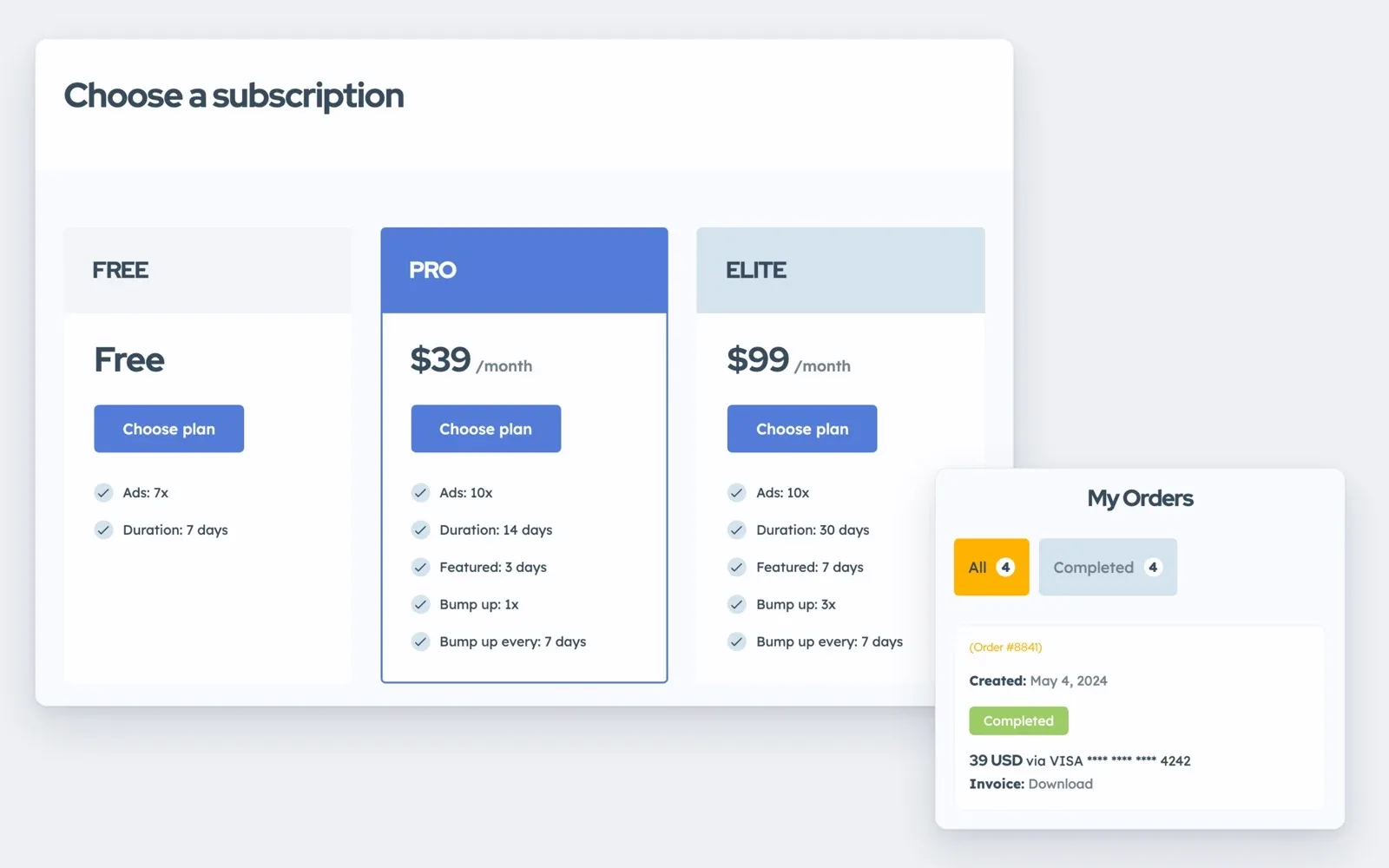
A plan gives an agency a set number of listings, featured days and bumps. Stripe renews it every month, and agencies can switch plans in their Settings.
Subscriptions (Membership) - how to configure -
Featured listings
A featured listing shows first when visitors sort by Most Relevant, and it carries a Featured label. Featured days can be added to a live listing, and its end date stays the same.
Featured Packages -
Bump up, or move to top
A bump moves a live listing back to the top of its group, like a new one. It helps a home that has waited weeks for a buyer, and a package can bump it on a schedule.
Monetization - Bump Up (Manual and Automatic) -
Banners for home services
Mortgage brokers, movers and lawyers want to reach people who are about to move. Once visitors come every day, sell them a spot on your pages, placed in Elementor like any other block.
Not all five start at once. Featured days and bumps can be sold from day one, because listing a home stays free. Charging owners and agencies to list, and selling banners, comes later, once buyers arrive.
What a property portal can earn
A property listing website business grows with its listings more than with its prices. So start with how many homes your portal could list in your city each month.
Work out what your portal could earn
Type your own numbers for one city, and start low, because a new portal gives most listings away.
A month
800
A year
9,600
In your own currency. Packages bought plus upgrades sold, before payment fees and taxes.
The calculator counts packages and upgrades. Count only owners' homes in the first box, because agencies pay through plans. Then multiply the agencies you expect by your monthly plan price, and add that on top.
The result is income, not profit. Payment providers keep a fee from each payment. Google Maps needs a key with billing, though a free monthly credit covers most sites.
Start your portal from the Real Estate demo
Get your own Listivo website with the demo you pick and the full WordPress admin, ready in a minute.
Try Listivo free Free for 7 days. No card needed.How to start a property portal in one city
Building the site is the quick part of creating a property listing website. Most of the work is getting the first homes and the first buyers, so plan for both.
1. Pick one city and one kind of home
A portal is useful when it shows most of the homes in its area. One city with 300 listings beats a whole country with 300. Start where you know the agencies, and in a big city pick one kind of home, such as rentals or new homes.
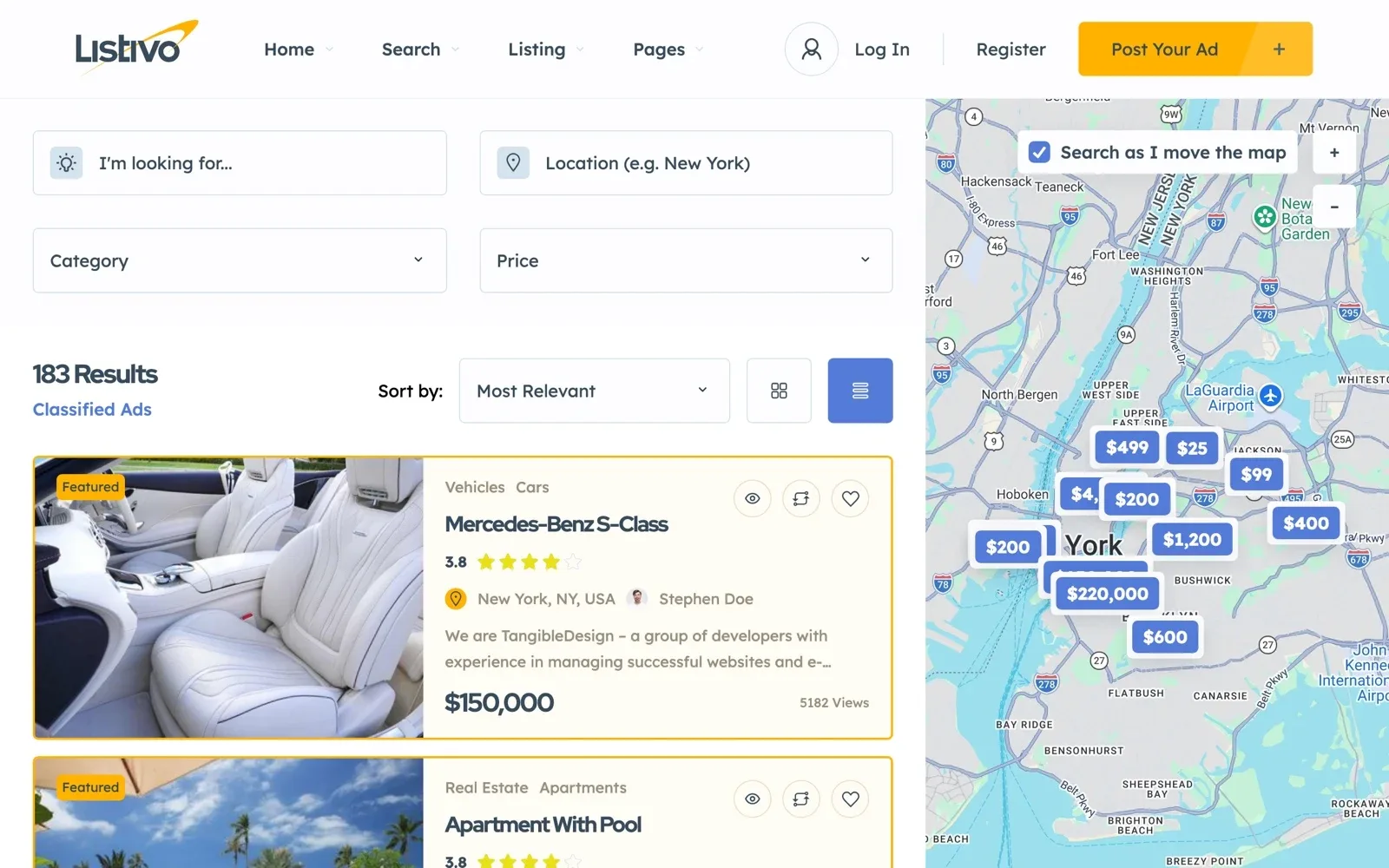
Listivo can take locations from your own list of towns and districts, with no Google key. With a Google Maps key instead, visitors search within a distance of any address and see homes as price pins on a map. The guide Location Field based on predefined list (taxonomy) instead of Google Maps shows the first way.
2. Start from the Real Estate demo
The Real Estate demo has For Sale and For Rent tabs, with a search by property type, price and location. Its cards show beds, baths and size, and rents carry "/month" after the price.
Each category gets its own form, and every field you add can become a search filter. Add the details buyers in your city ask about first, such as parking, a garden or the floor.
The full build, from the demo to the plans, is in our guide on how to create a website like Zillow. It takes you through seven steps.
3. List the first homes before you charge
Buyers come for homes, and agencies pay only where buyers are. So the first months are about listings, not money.
- Invite ten local agencies to list for free, on the free monthly plan
- Give owners an always-free package, or a free pack of listings on sign-up
- Let owners write the listing first and sign up at the end
- Ask every agency for all its homes, not a sample
- Every agency gets a page with all its homes, so ask each one to share it
A free monthly plan needs Stripe, like the paid ones. Our 30-day plan for the first ads on a new classifieds website works for homes too.
4. Keep every listing real
A fake home, or a sold one still online, costs a portal more trust than a missing home. Three steps keep the listings honest.
- Turn on moderation, so every new listing waits for your approval
- Require approval again when an agency edits a listing
- Add an Offer Type field, so agencies can mark a home as sold
A sold home then shows a Sold label on its card. It can leave the search while its page stays online. For more, read how to stop spam and fake ads on a classifieds website.
5. Switch on payments once agencies get inquiries
Start charging when agencies get calls and messages from your portal, not on a fixed date. Ask the first agencies what a new buyer is worth to them, then set your plan price.
Owners pay for packages at a WooCommerce checkout, through the payment plugin you pick. Choose a provider that works where you live. Agency plans need Stripe, and they renew every month.
Rather have us build your portal?
We can build the whole Listivo portal for you, from the fields of a home to agency plans, while you meet the agencies.
Custom Website
Photos, your logo and a few words are enough. We design and write the whole website, and you pay only when you approve it.